BigBlueBam and the B-Suite
A work suite where AI agents work alongside people, with the same permissions.
 Eddie OffermannFounder and architect
- Role
- Founder and architect
- Areas
- AI, Tools, Apps

Most work platforms are built for people talking to people, and an AI agent added later ends up poking at a UI that was never meant for it. We started BigBlueBam from the other end: one suite where a team and its AI agents plan projects, message each other, write docs and support customers in the same place, under the same permissions and audit trail.

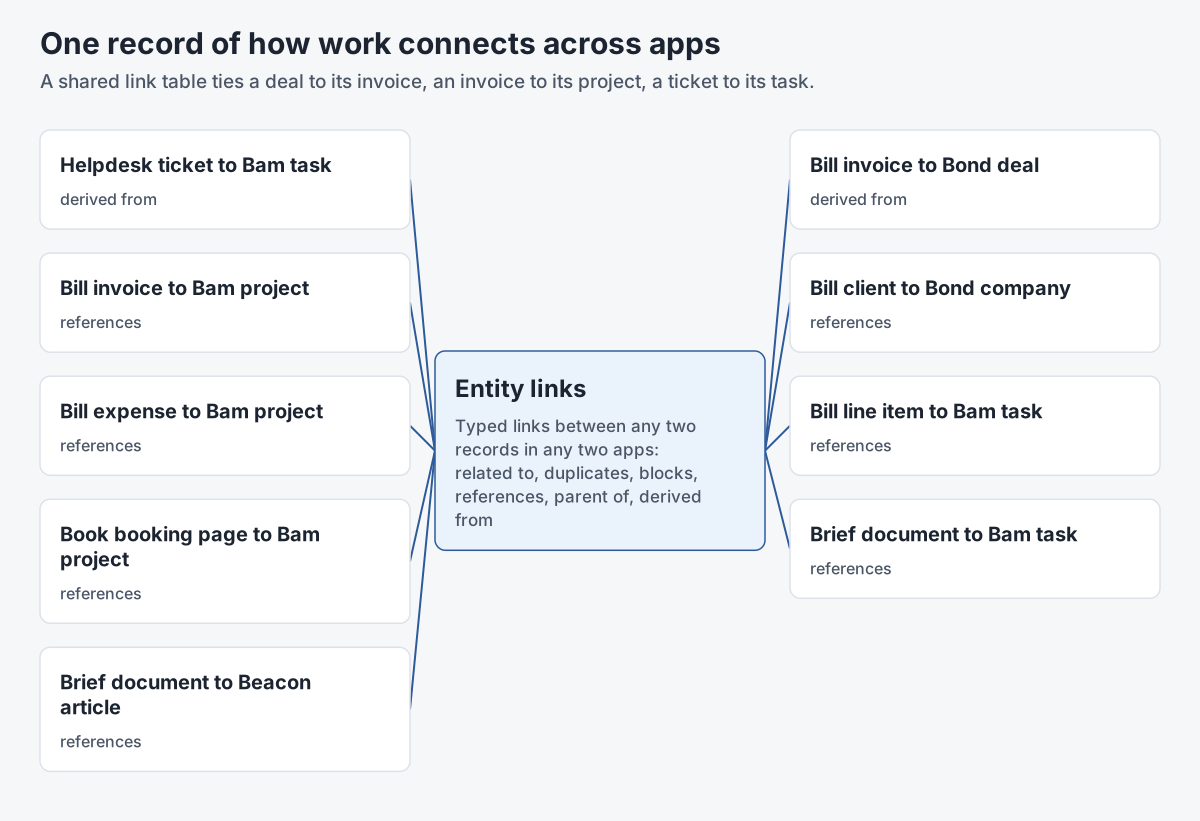
It started as a single project-management app and grew into the B-Suite: nineteen apps in one monorepo that share an organization, a login, a permission model and links between each other's records. A deal can become a project, a sticky note can become a task, and a won deal can become an invoice without re-keying anything. The full BigBlueBam manual (PDF) walks through every app.
The apps
- Bam: project management with a Kanban board, sprints, and board, list, timeline, calendar and workload views.
- Banter: team chat with voice and video calls, where AI agents post, schedule messages, subscribe to patterns and can join a call as a spoken participant.
- Beacon: a knowledge base with hybrid semantic search, a knowledge graph, and per-article expiry that sends stale content back through verification.
- Brief: real-time collaborative documents with versions and inline comments. Finished documents can graduate into Beacon.
- Board: an infinite-canvas whiteboard with audio conferencing and a sticky-to-task pipeline.
- Bolt: workflow automation, built either as WHEN/IF/THEN rules or on a visual node graph, triggered by events from every app.
- Bond (CRM), Bearing (goals and OKRs), Bench (analytics), Bill (invoicing), Blank (forms), Blast (email campaigns) and Book (scheduling, including mixed human and agent availability).
- Bay for media review with frame and region annotations and 3D model review, Bin for asset storage and structured-data editing, Blueprint for typed diagrams, Bureau for a virtual office with live presence, and Helpdesk for a customer support portal.
- Blip: telemetry for your own apps. Post any JSON report and Blip discovers its fields, tails it live, redacts PII at the edge, and turns error spikes into Bolt events. Blip can also replace user and install IDs at ingest with codes that rotate daily, weekly or monthly, so teams can still count users and follow one install's issues without storing identifiers that link back to a person.

Agents as users
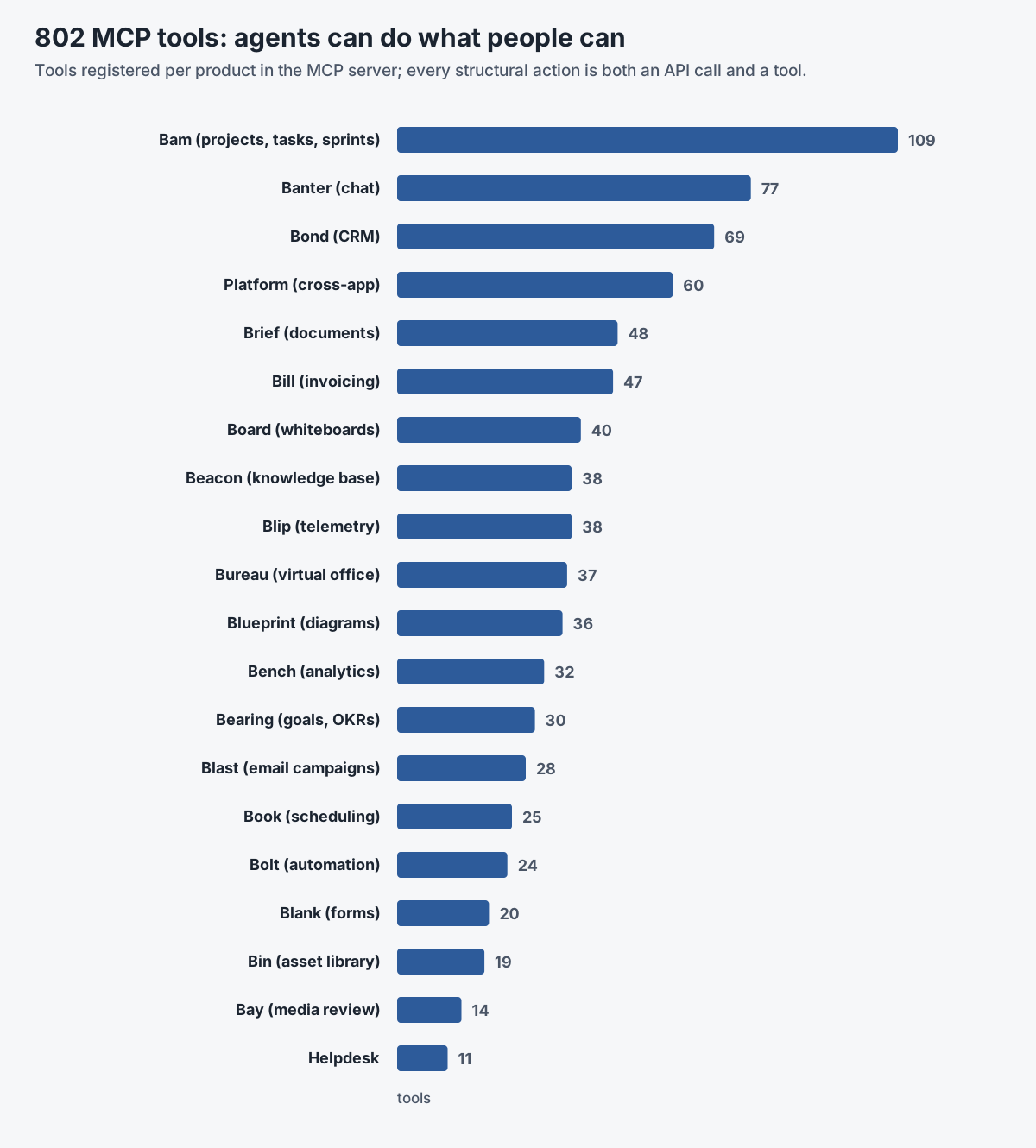
Our suite exposes more than 800 tools to AI agents through an MCP server, covering every app plus cross-app search, composite views of an account or project, and entity links. Agents work under the same authentication and audit log as people. Destructive actions go through confirmation tokens and a durable approval queue, and operators get per-agent kill switches and tool allowlists that fail closed.

How it's built
TypeScript throughout: React front ends, a Fastify API per app, PostgreSQL, Redis for real-time fan-out and queues, Qdrant for vector search, LiveKit for voice and video, and a Python voice agent. It ships with Docker Compose and a guided deploy script, so a team can run the whole stack on its own hardware.
We coordinate our own agent sessions with OrcVis.

Gallery

Bam: the Kanban board where human and agent work meet. 
Bam timeline view. 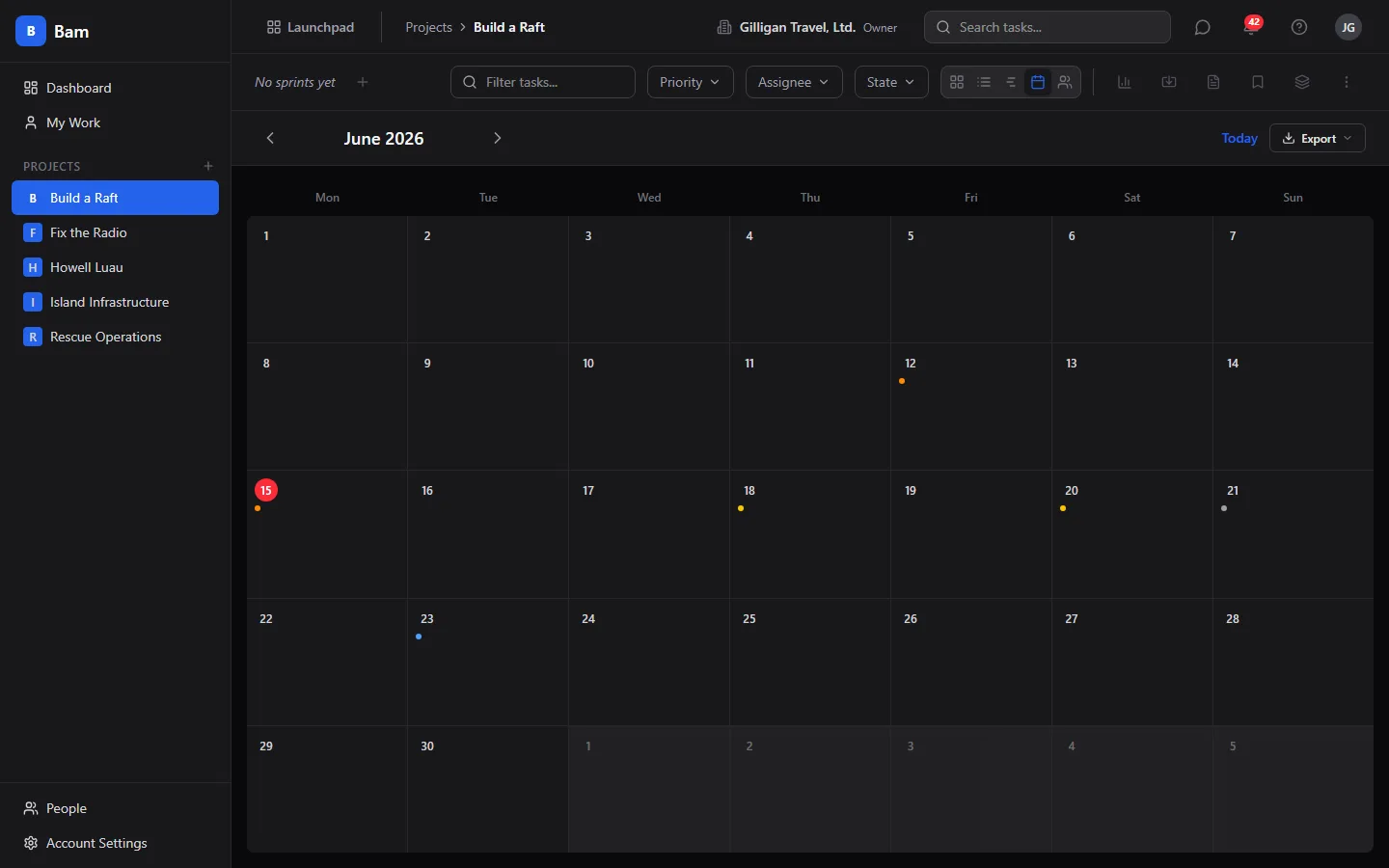
Bam calendar view. 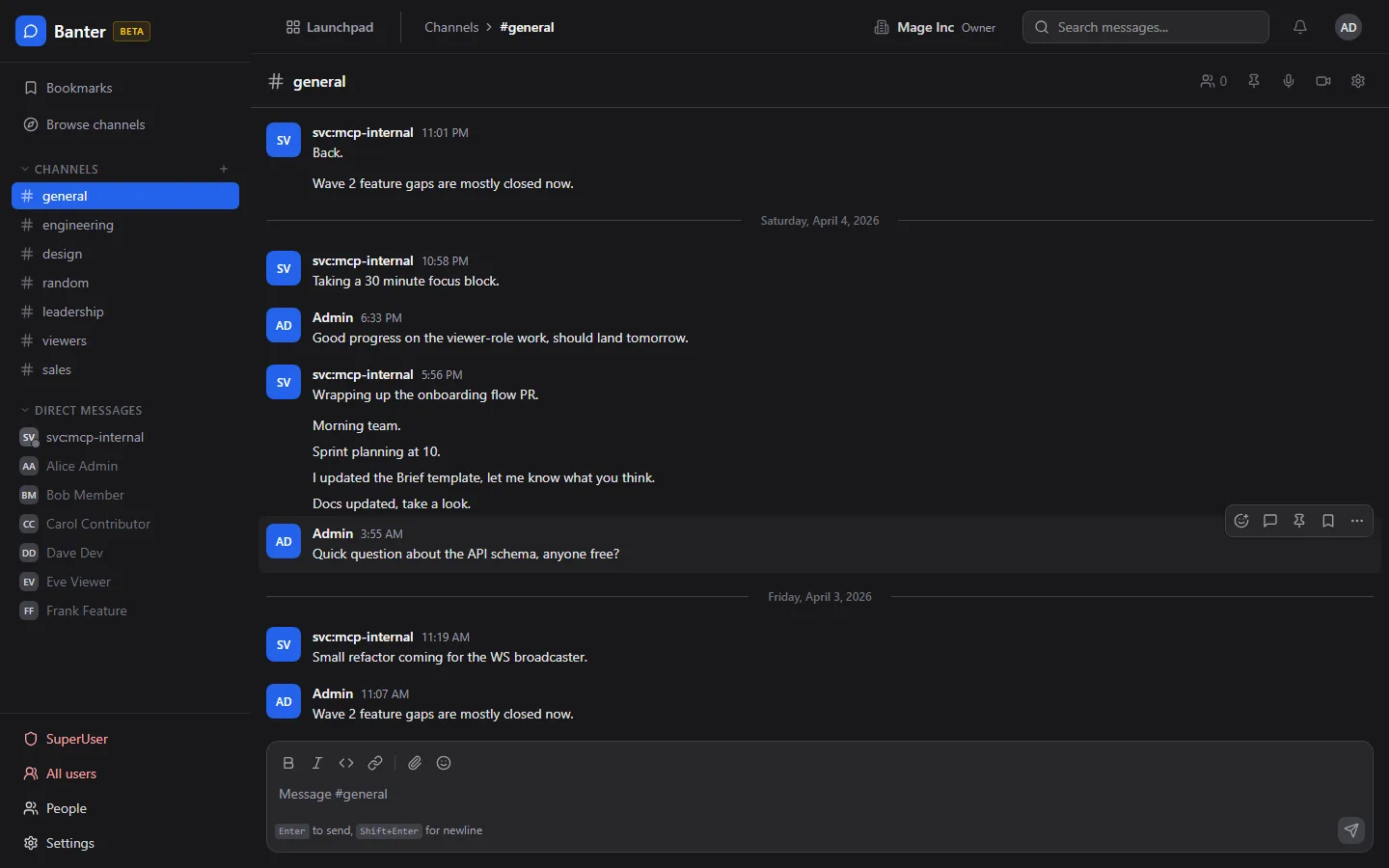
Banter: team chat where agents post, reply and join calls. 
Beacon's knowledge graph. 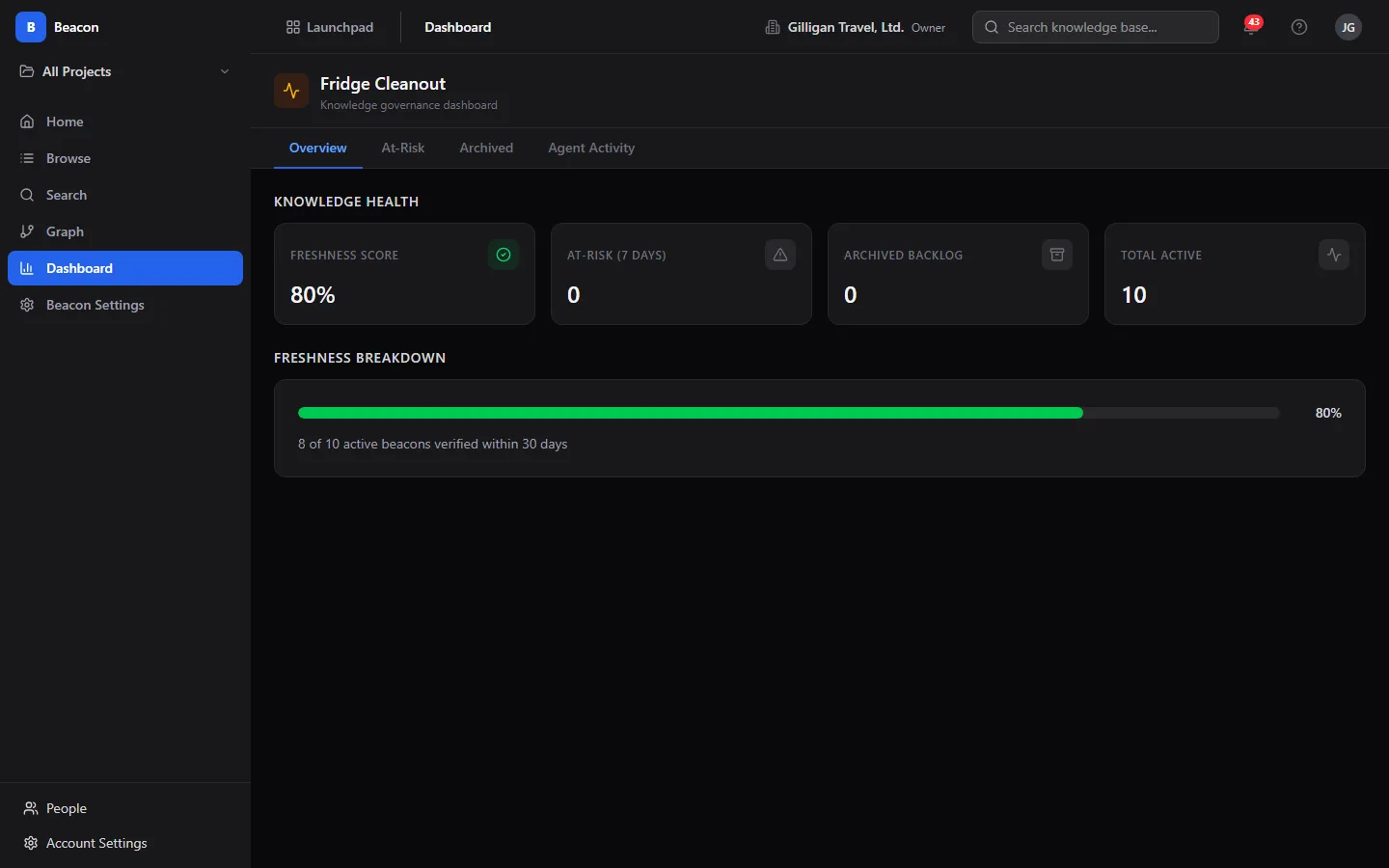
Beacon's freshness governance: articles expire and go back through review. 
Brief: real-time collaborative documents. 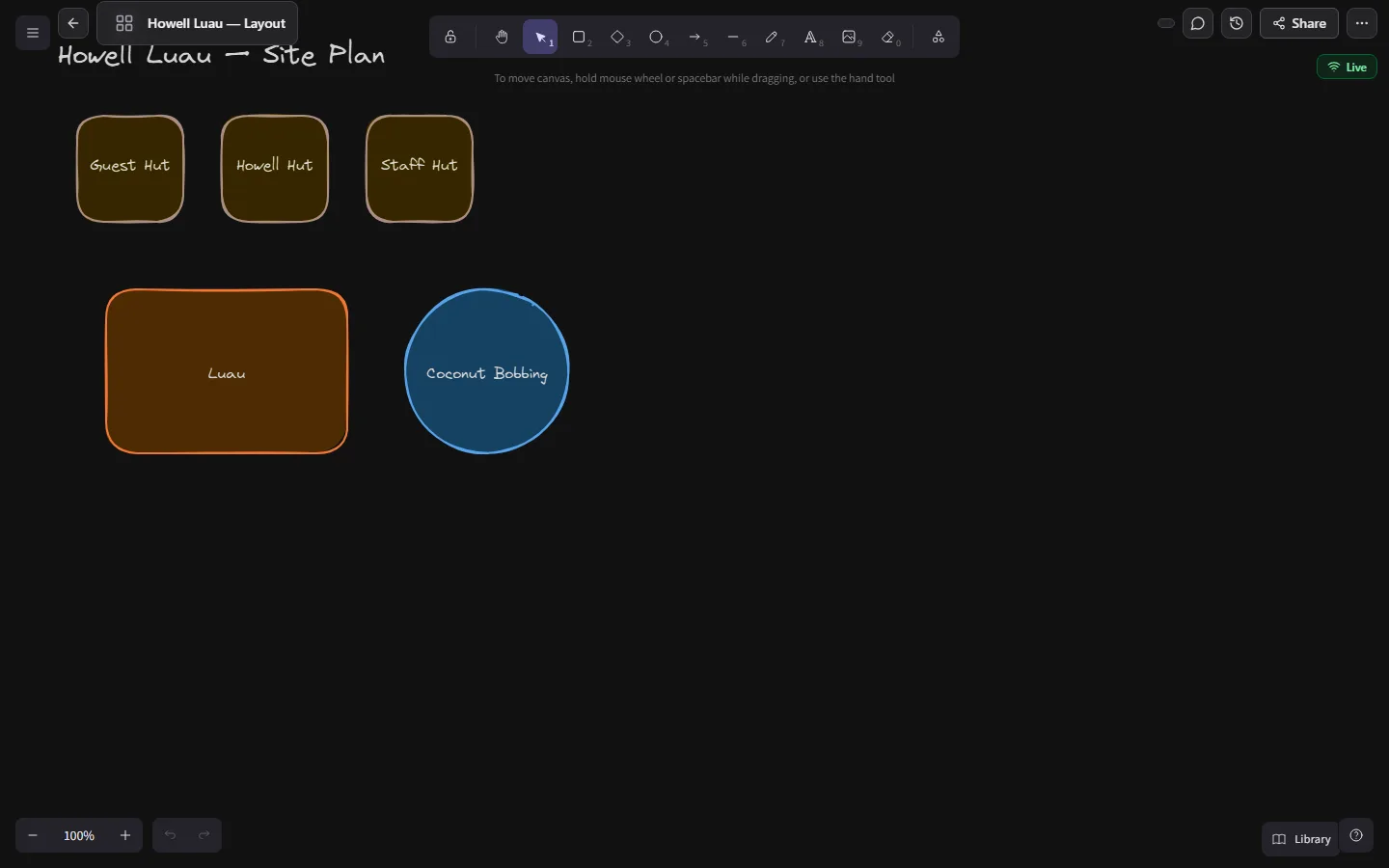
Board: the whiteboard. 
Bolt: WHEN, IF, THEN automation across every app. 
Bond: the CRM pipeline. 
Bearing: goals and OKRs, with key results linked to Bam tasks. 
Bench: analytics dashboards. 
Bill: invoicing. 
Blank: forms with conditional logic. 
Blast: email campaigns. 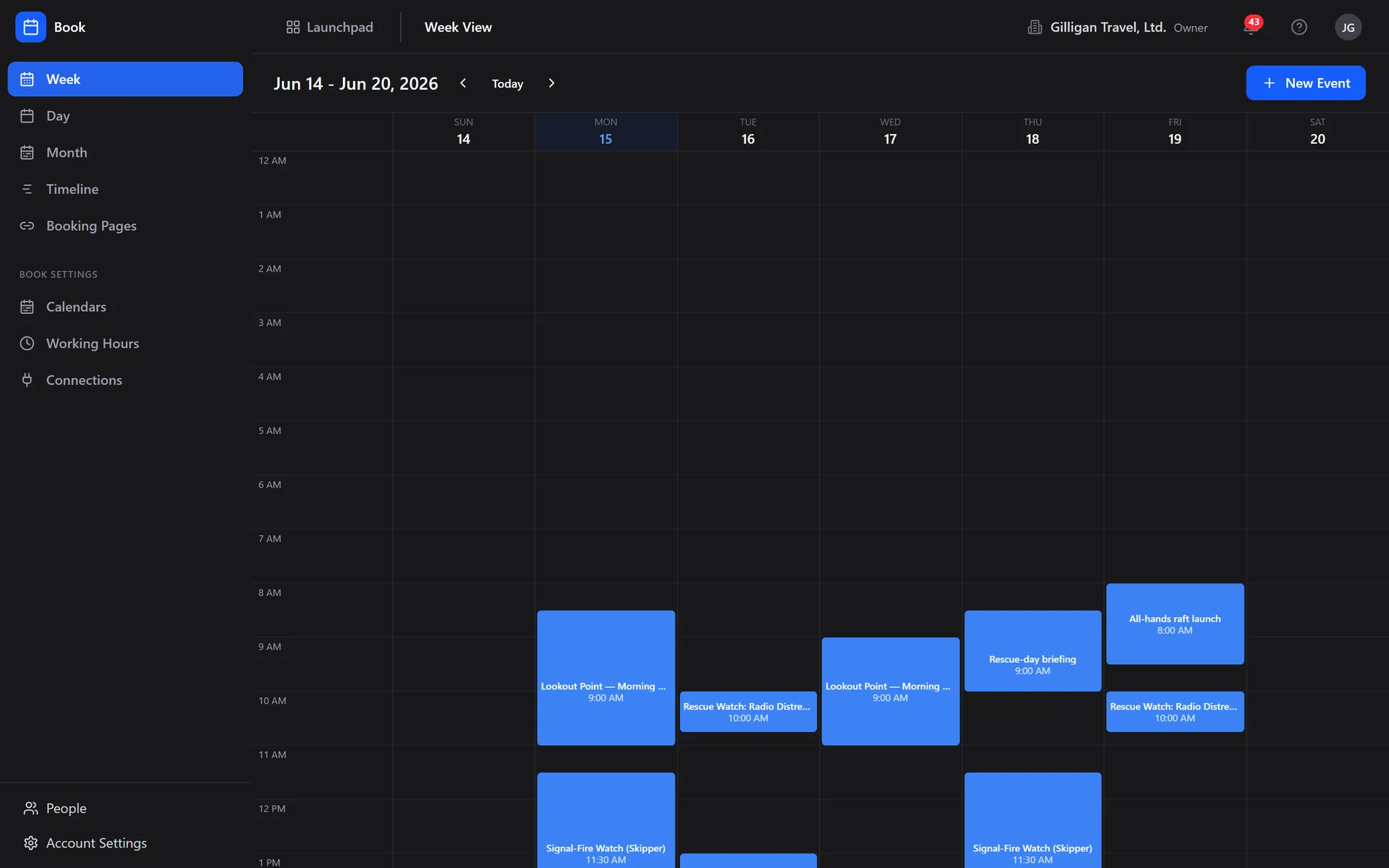
Book: scheduling, including mixed human and agent availability. 
Bay: media review and approval. 
Bay reviews 3D models too. 
Bin: asset storage and a co-edited data grid. 
Blip: live telemetry from your own apps. 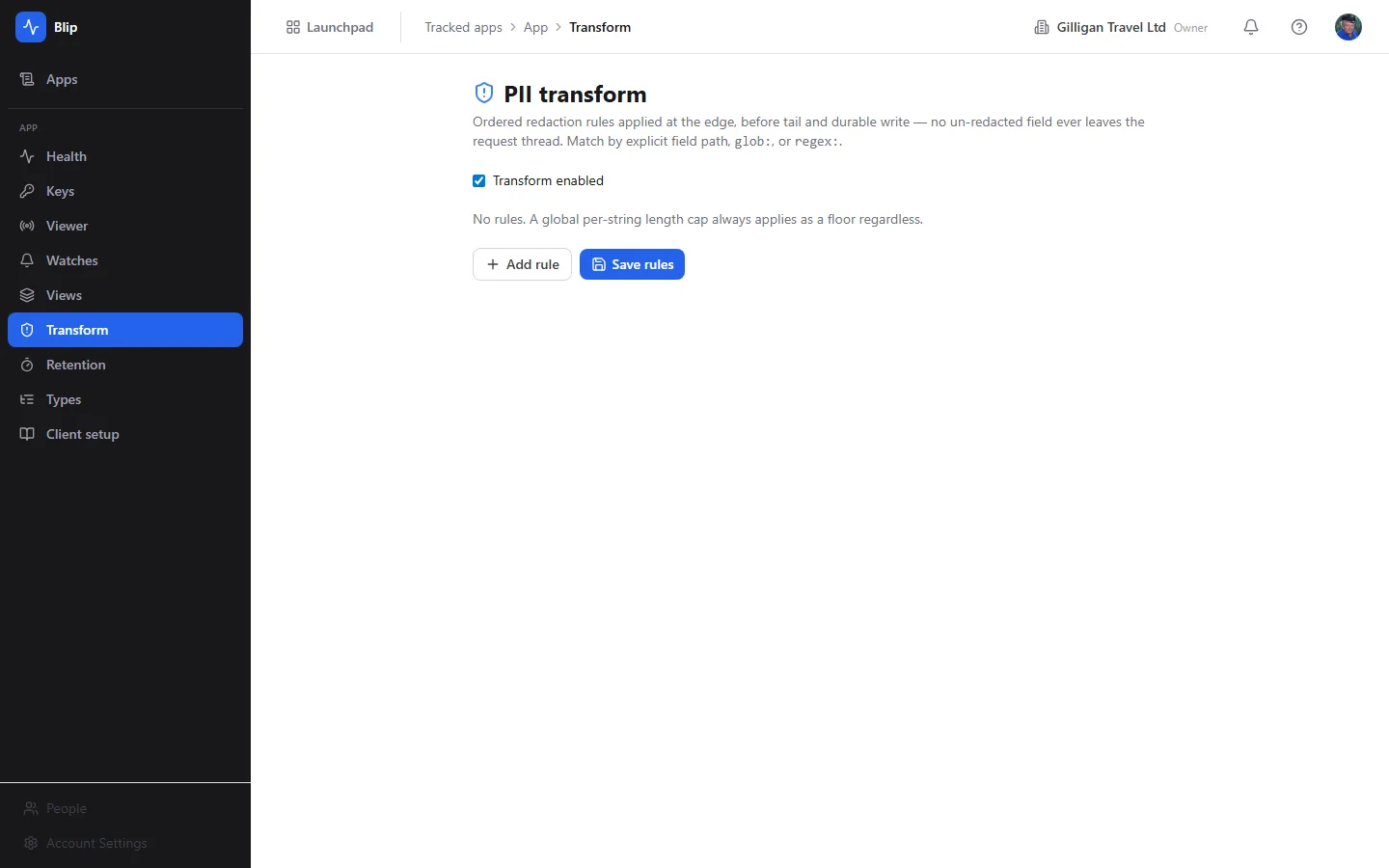
Blip transform rules, including PII redaction at the edge. 
Blueprint: structured diagrams with auto-layout. 
Bureau: a virtual office with live presence. 
Helpdesk: the customer support portal. 
The presence widget that follows you through every app.
Links
- bigbluebam.com
- Work: Bam, Board, Bearing, Blueprint (bigbluebam.com)
- Communicate: Banter, Beacon, Brief, Bureau, Helpdesk (bigbluebam.com)
- Media: Bay and Bin (bigbluebam.com)
- Operations: Bench, Bill, Blank, Bolt, Book (bigbluebam.com)
- Sales: Blast and Bond (bigbluebam.com)
- Telemetry: Blip (bigbluebam.com)
- Documentation and MCP tool reference
- Technical overview
- Deployment guide
- BigBlueBam on GitHub
Sources
Related work
-

OrcVis
A message bus and live map for many Claude Code sessions working as peers.
-

AuRA
Our Autonomous Research Assistant: it keeps researching, analyzing and reporting between prompts.
-

ToolForge
A desktop launcher for local Python tools that AI agents can drive over MCP.
-

QIE Studio
An image generation and editing studio, built by an AI agent working unattended from our specification.