North Star Stereoscopic Telepresence
A preview of a fully 3D, ultra-HD video call with realtime perspective shift.
 Eddie OffermannHardware selection and prototyping, full software stack, networking, realtime robotics control
- Role
- Hardware selection and prototyping, full software stack, networking, realtime robotics control
- Areas
- Telepresence, Hardware, Computer Vision, Research

The brief: demonstrate, by any means necessary, the highest possible quality telepresence. That meant 3D, room scale, and an observer free to move, so people could experience what a fully 3D ultra-HD video call with realtime perspective shift might feel like twenty years out.
We proposed the solution, selected the hardware, built the rigs and wrote the software. A pair of cinema cameras sits in a 3D-printed cage at a fixed spacing, and the cage hangs from the wrist of a robotic arm. An additional high-fidelity RGB and depth sensor rode on the rig to collect extra data during development and testing. Realtime head tracking of the observer drives the arm, so the remote viewpoint follows the viewer's head. Fiber networking delivers stereo 4K video to a stereoscopic display in under 16 ms, less than a single frame.
Getting there took a series of smaller experiments: choosing cameras and lenses, tracking a head with a VR controller on a strap, and measuring how fast the tracking could report movement before the arm ever moved.
Part of Enhanced Presence.
Gallery
Putting the motion-control rig through its paces. Measuring tracking latency and movement in realtime. 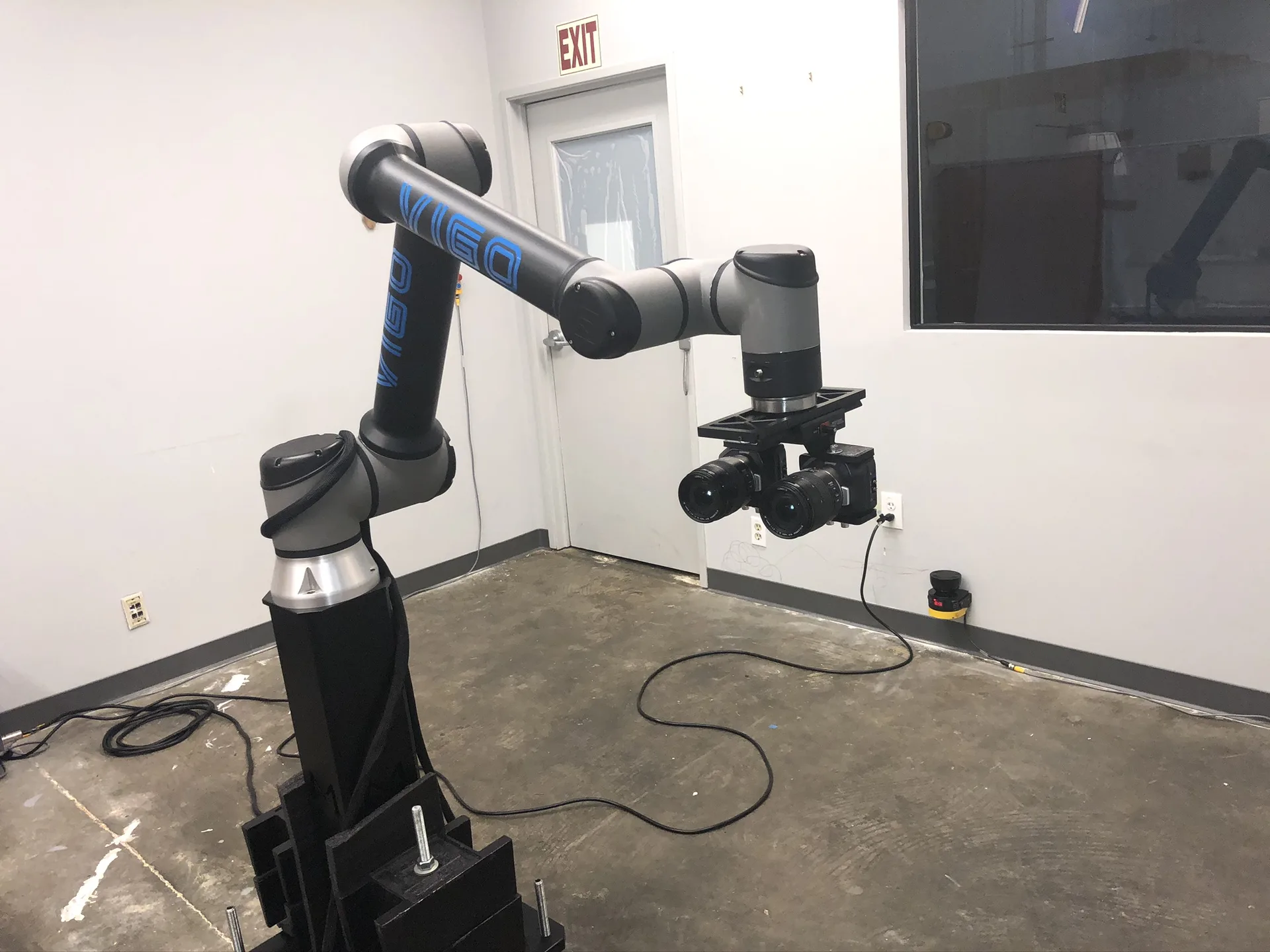
The arm moves the cameras to match the remote viewer's head. 
The full reach of the arm. 
The stereo pair on the arm's wrist plate. 
The cameras from the subject's point of view. 
The printed cage holds the stereo pair at a fixed spacing. 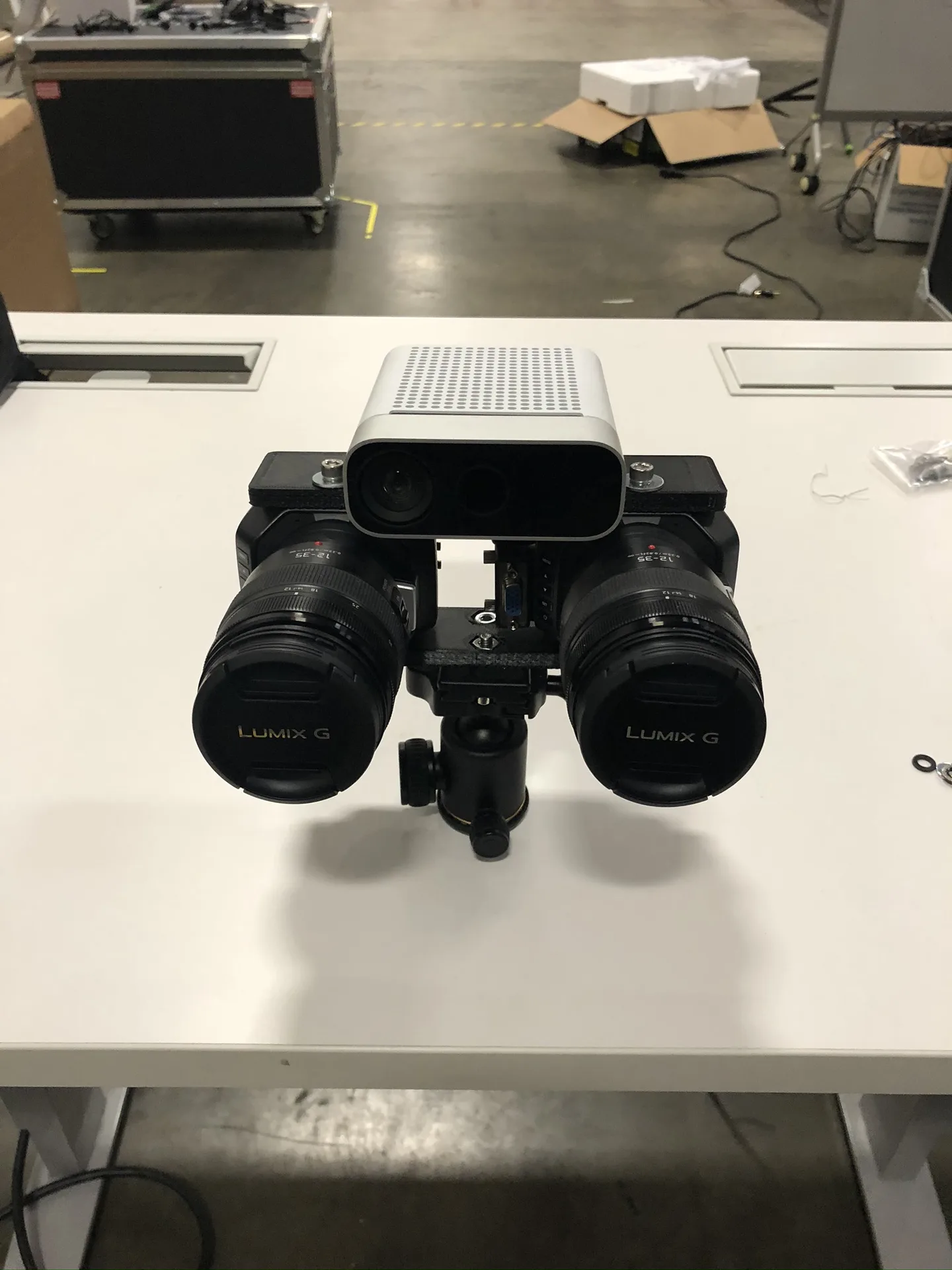
An early configuration with an additional RGB and depth sensor above the lenses. 
From above, with the additional RGB and depth sensor seated between the cameras. 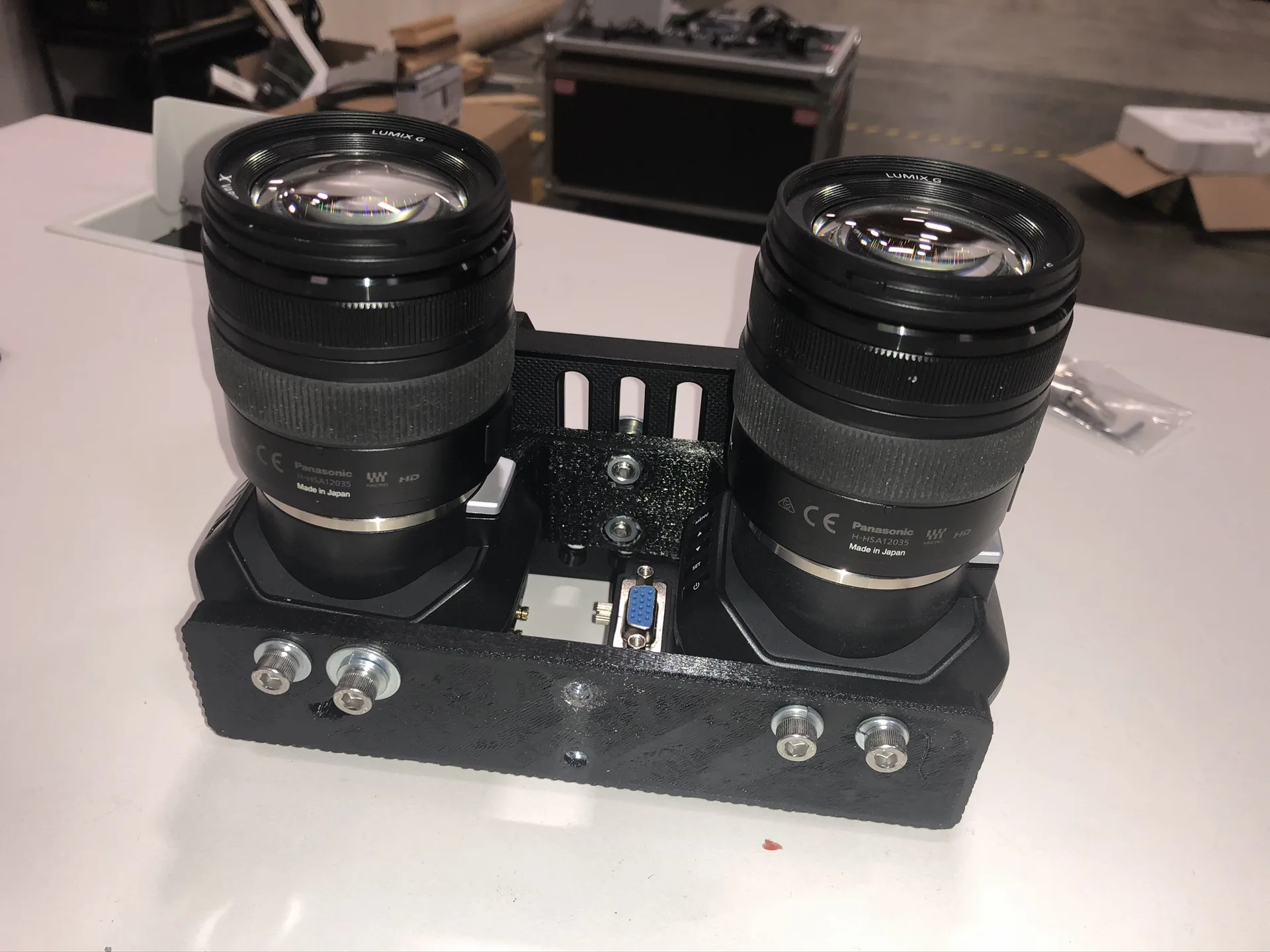
The assembled rig before it went on the arm. 
Head tracking, tested on a mannequin with a tracked controller on a head strap. 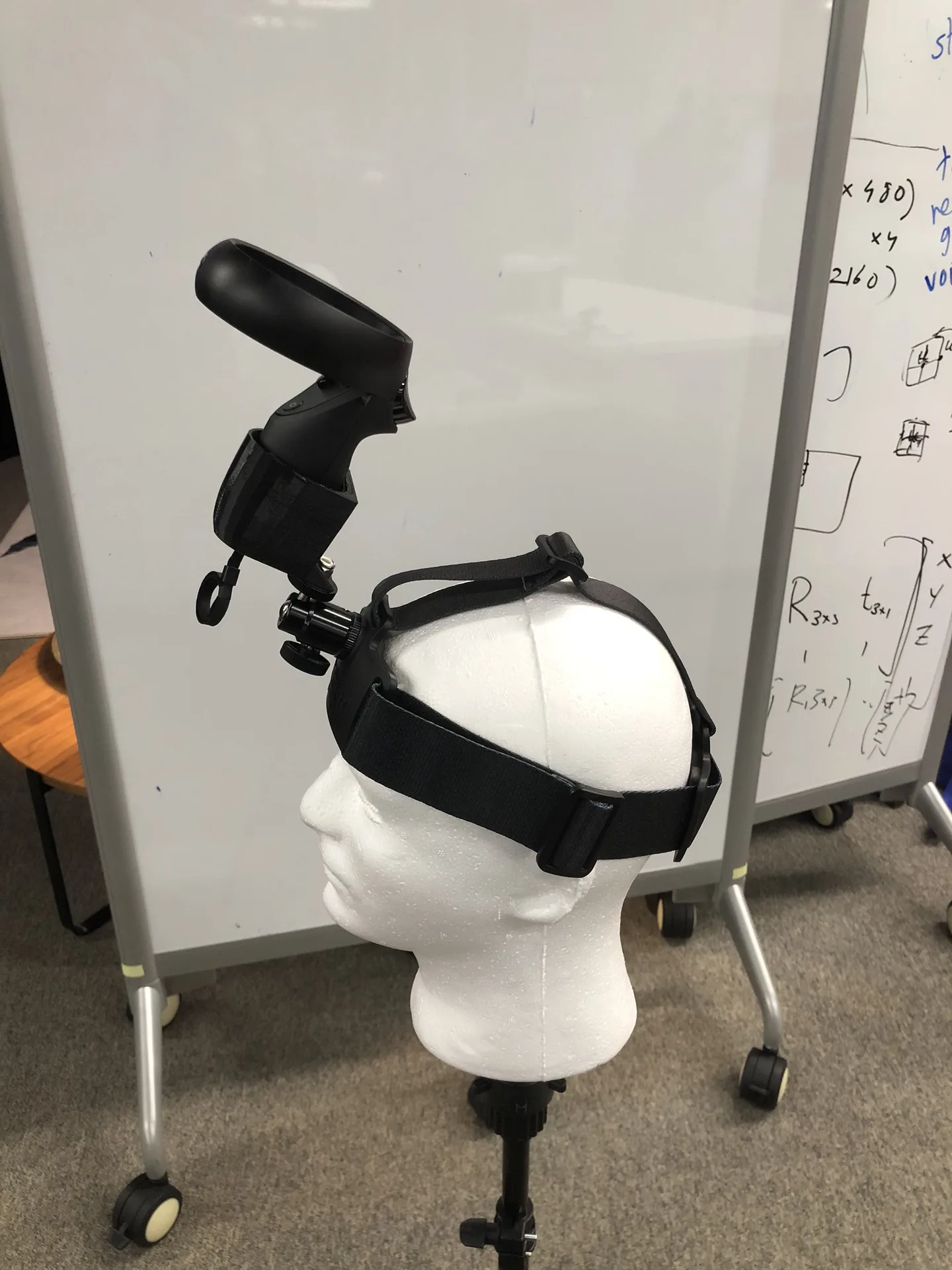
The tracker mount from the side. 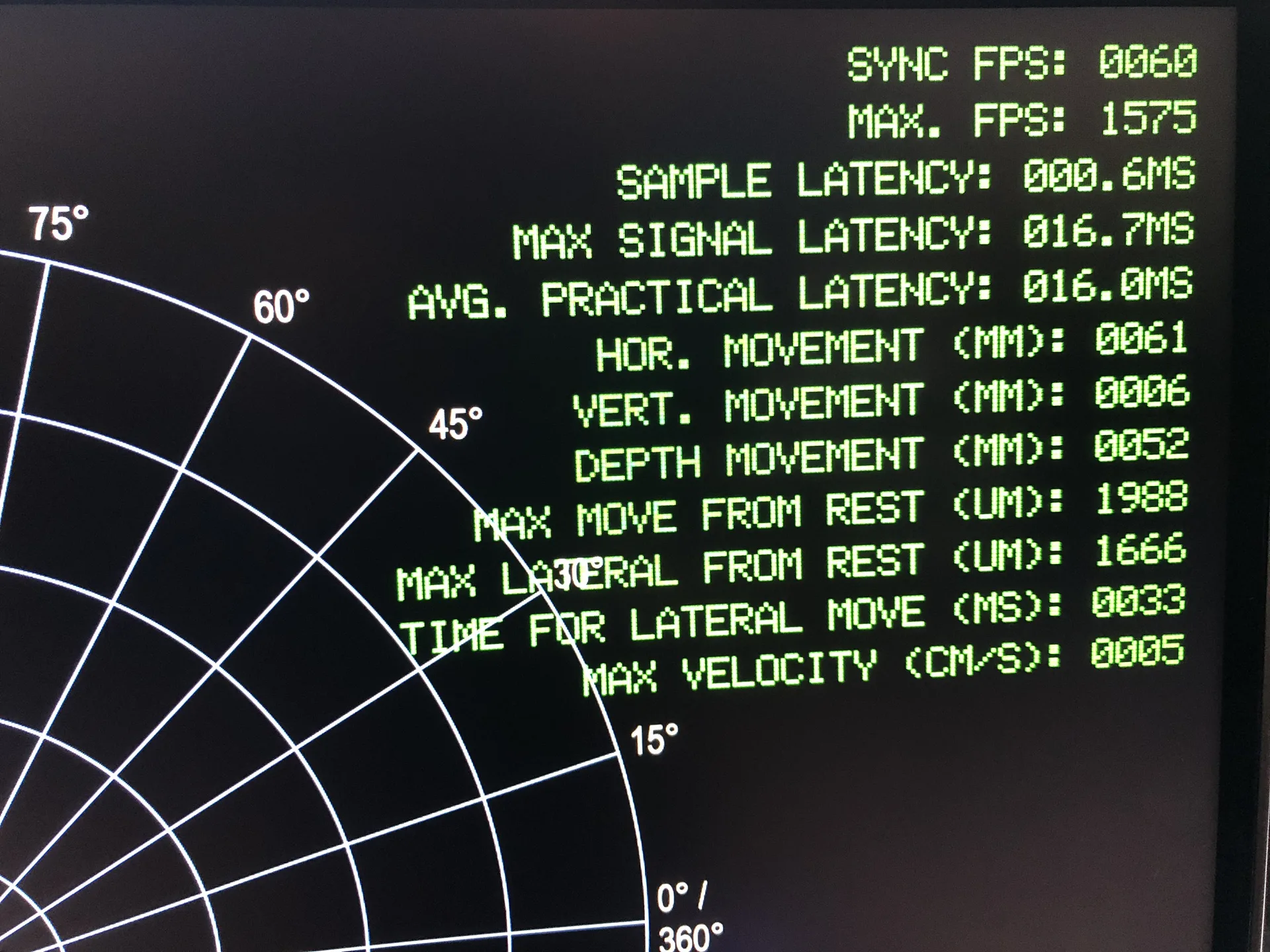
Latency readouts from the tracking test. 
Plotting head movement on two planes.
Related work
-

Enhanced Presence
A run of prototypes chasing the feeling of being in the room with someone far away.
-
Glasses-Free 3D Telepresence
Volumetric calls on a 45-inch autostereoscopic display, no glasses required.
-

Projection AR Tabletop Gaming
Augmented reality projected onto an ordinary table, with touch.
-

Transparent Volumetric Display
A see-through, desktop-sized display that shows a remote person with realtime parallax.